Choosing the right disposable plate is no longer just about price or convenience. Restaurants, caterers, food delivery businesses, and event organizers must also consider durability, food safety, environmental impact, and customer expectations. With several materials available, finding the right option requires looking beyond appearance.
Bagasse, bamboo, paper, and plastic each have different strengths. Some handle heavy meals better, while others are more suitable for lightweight snacks or situations where cost is the main concern.
In this guide, we compare these four materials to help businesses and consumers choose the best Disposable Plate for their needs.
Why Does Disposable Plate Material Matter?
The material determines how well a plate handles hot food, oily dishes, sauces, and different serving conditions. It also affects storage, transportation, disposal, and overall value.
For example, a plate designed for dry snacks may struggle with a serving of curry and rice. Similarly, a restaurant serving complete meals may benefit from compartment plates that keep different foods separate.
Before choosing disposable plates, consider three important factors:
- Performance: Can the plate support the food without bending or leaking?
- Practicality: Is it suitable for takeaway orders, catering, or everyday service?
- Environmental impact: What resources are used to manufacture it, and what disposal options are available locally?
Understanding these differences makes it easier to select tableware that meets both operational requirements and customer expectations.
1. Bagasse Plates: A Strong Alternative to Traditional Plastic
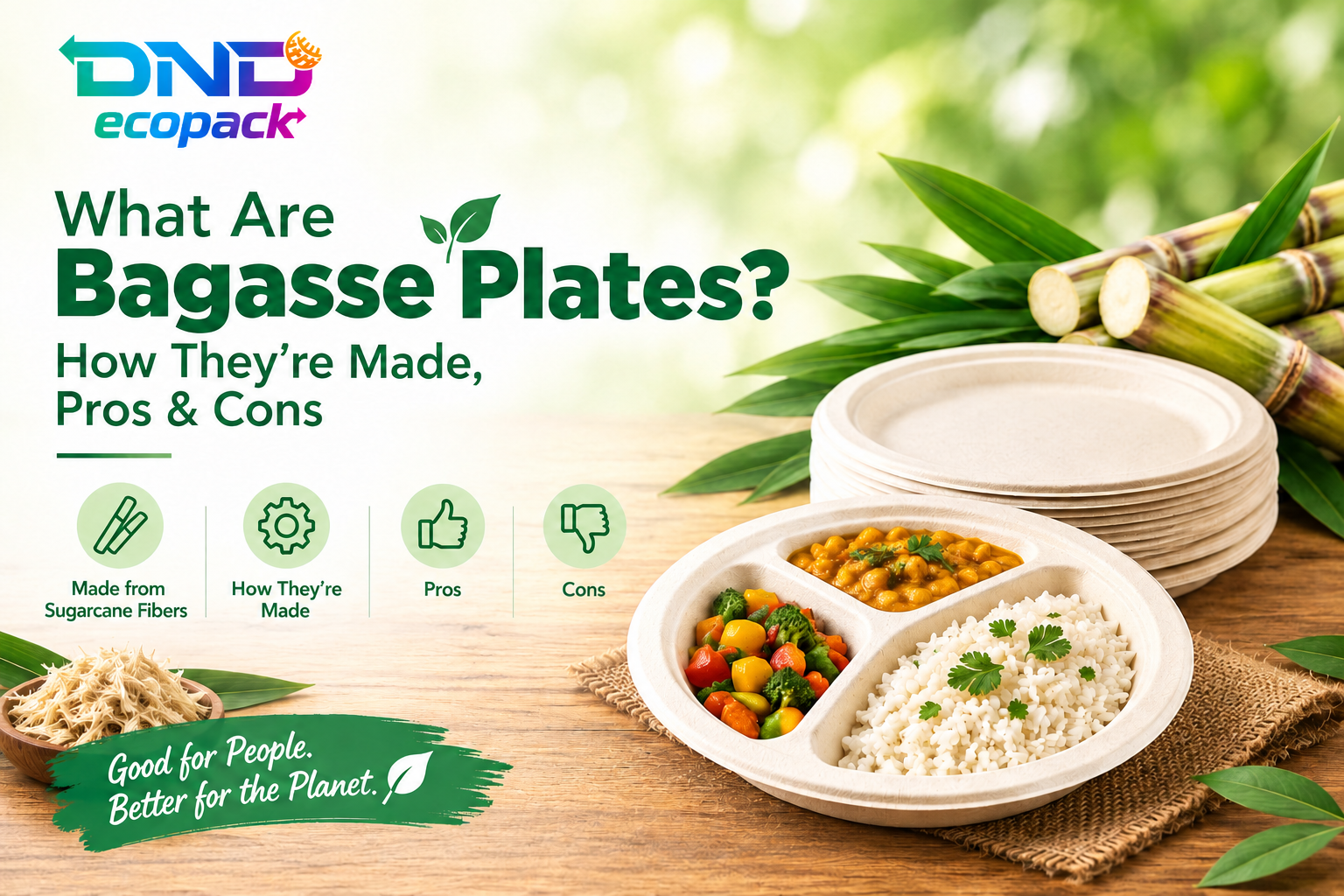
Bagasse is the fibrous material remaining after sugarcane stalks are crushed to extract their juice. Manufacturers can process these fibers into plates, bowls, trays, and food containers.
One reason bagasse plates are gaining attention is their combination of strength, convenience, and use of an agricultural by-product.
Advantages of Bagasse Plates
Bagasse plates are generally rigid and suitable for serving many hot, oily, and moist foods, depending on the product specification. They are useful for restaurants, office cafeterias, food festivals, and catering services.
Unlike conventional plastic plates, bagasse products can offer a fiber-based alternative that may be commercially compostable under suitable conditions. However, actual compostability depends on the product’s composition, coatings, certifications, and available waste-management facilities.
Businesses serving complete meals can also choose sectional disposable plates. These designs help separate rice, vegetables, bread, sauces, and other items without requiring additional serving dishes.
For example, 3 compartment plates are useful for meal services, institutional catering, and takeaway orders where keeping different foods separate improves presentation.
Things to Consider
Bagasse products vary in thickness, strength, and resistance to liquids. Some may soften during prolonged exposure to moisture. Buyers should check product specifications and test samples with their actual menu.
Best for: Restaurants, catering businesses, takeaway meals, and businesses looking for alternatives to conventional plastic tableware.
2. Bamboo Plates: A Plant-Based Tableware Option
Bamboo is a fast-growing grass used in a wide range of products, including disposable and reusable tableware. Depending on the manufacturing method, bamboo plates may be made from bamboo fibers, molded material, or thin bamboo sections.
Advantages of Bamboo Plates
Bamboo can regenerate relatively quickly, making it an attractive renewable resource when responsibly cultivated and managed. Bamboo plates can also offer a distinctive natural appearance that suits outdoor events, premium catering, and special occasions.
Their performance depends on how they are manufactured. Molded bamboo products may be suitable for particular food-service applications, while thin bamboo plates are often chosen for presentation and lighter servings.
Things to Consider
Not every bamboo plate is completely biodegradable or compostable. Adhesives, binders, surface treatments, and coatings can affect how a finished product breaks down.
Bamboo products may also cost more than basic paper plates, depending on their design and production method.
Best for: Events, premium food presentation, and buyers who prefer plant-based tableware with a natural appearance.
3. Paper Plates: Lightweight and Convenient
Paper plates remain a familiar choice for parties, office gatherings, picnics, and quick-service food businesses. They are lightweight, easy to transport, and available in numerous sizes and designs.
Advantages of Paper Plates
Paper plates are often economical for serving dry snacks, sandwiches, cakes, and other relatively lightweight foods. Their simple design makes them convenient for large gatherings where quick serving and cleanup are priorities.
They are also available in different thicknesses, including heavier options designed for more substantial meals.
Things to Consider
Basic paper plates may bend or become soggy when exposed to wet, greasy, or heavy food. Some products use plastic or other moisture-resistant coatings that complicate recycling and composting.
Therefore, businesses should check whether the plate is coated and what disposal options are accepted locally.
Best for: Parties, dry snacks, lightweight meals, and short-duration food service.
4. Plastic Plates: Durable but Environmentally Challenging
Plastic plates are valued for their low weight, affordability, and resistance to moisture. They can be practical for certain applications, particularly where a sturdy plate is needed at a low initial cost.
Advantages of Plastic Plates
Depending on the material and design, plastic plates can hold wet foods without absorbing moisture. Some are also strong enough to support heavy servings.
Reusable plastic plates are another option for businesses that can wash, sanitize, and reuse them safely.
Things to Consider
Single-use plastic plates contribute to plastic waste when they are not properly collected and managed. Many disposable plastic products are difficult to recycle economically because of food contamination, mixed materials, or limited local recycling infrastructure.
Regulations also vary by location. Businesses in India should check applicable single-use plastic restrictions before purchasing or distributing plastic tableware.
Best for: Suitable reusable applications and specific food-service situations where permitted, appropriate plastic products meet operational requirements.
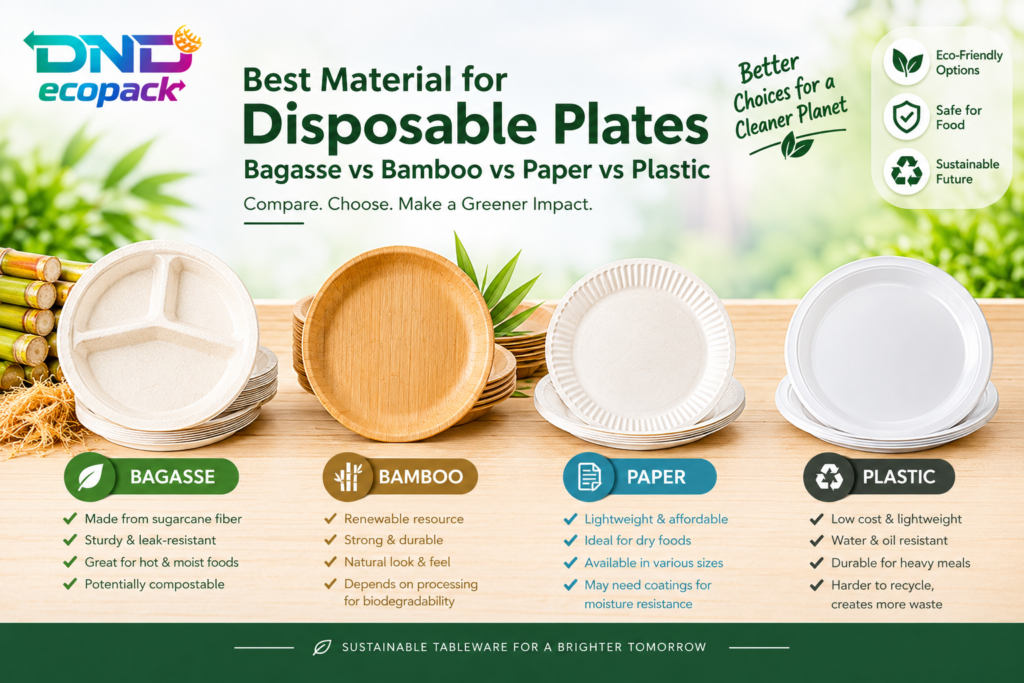
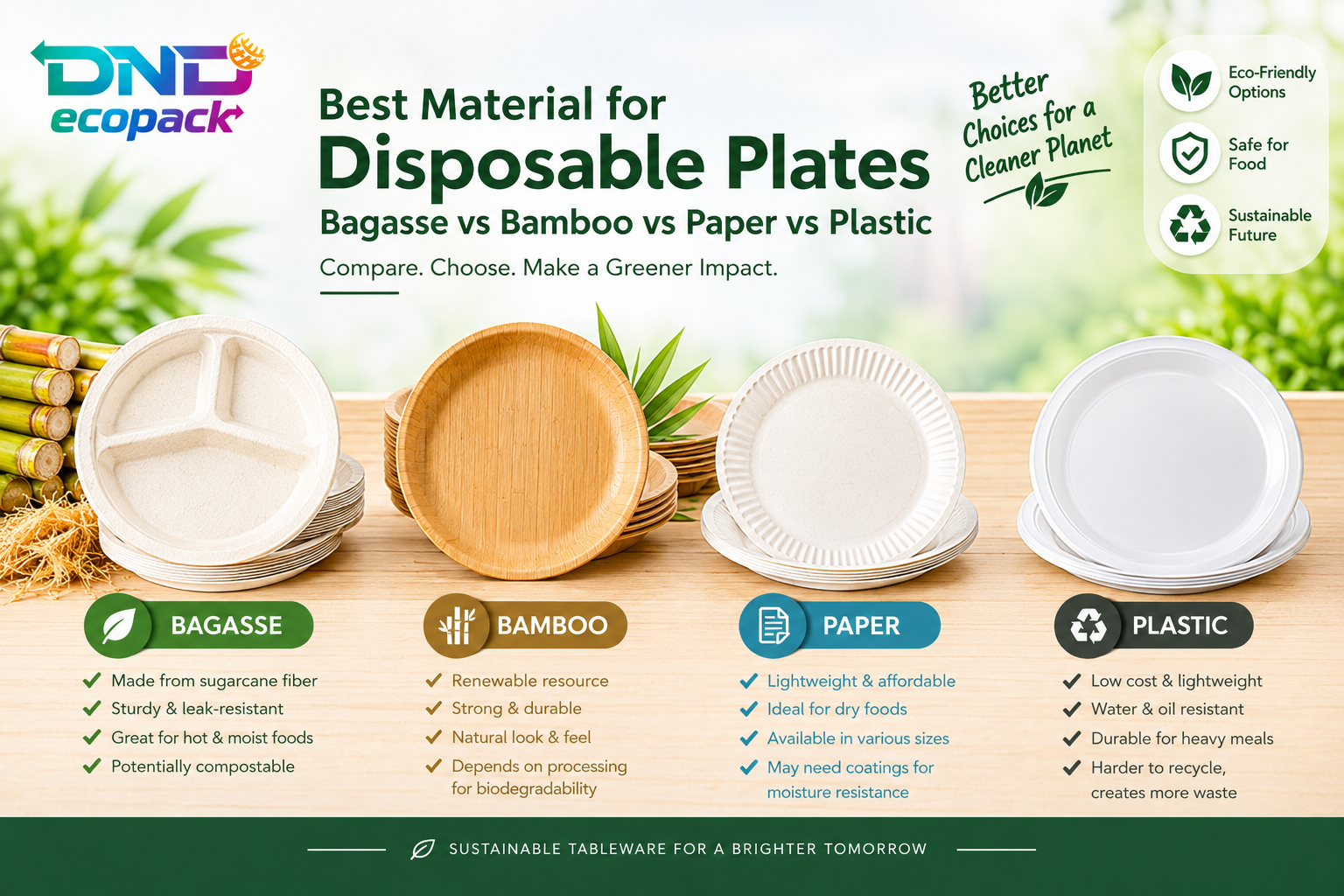
Bagasse vs Bamboo vs Paper vs Plastic: Quick Comparison
| Feature | Bagasse | Bamboo | Paper | Plastic |
| Material source | Sugarcane fiber by-product | Bamboo | Paper pulp | Usually fossil-based polymers |
| Strength | Generally good | Varies by design | Low to moderate | Varies by design |
| Moisture resistance | Product-dependent | Product-dependent | Often limited without coatings | Generally good |
| Environmental considerations | Potentially compostable under suitable conditions | Depends on processing and additives | Depends on coatings and recycling options | Waste and recycling challenges |
| Common applications | Complete meals and catering | Events and food presentation | Snacks and light meals | Single-use or reusable service, depending on product |
There is no universal winner for every situation. The best material depends on the food, product construction, budget, local disposal infrastructure, and applicable regulations.
How to Choose the Right Disposable Plates for Your Business
Start with your menu and serving conditions rather than selecting a material based on price alone.
Choose the Right Shape and Design
Round plates work well for snacks, main courses, and general meal service. For customers ordering several dishes together, disposable divided plates can help maintain separation and improve presentation.
Businesses can explore sugarcane round plates for standard serving requirements and compartment plates disposable for meals containing multiple items.
Match Plate Strength to Your Menu
Test plates with actual food portions, including gravies, oily dishes, and hot meals. Check for bending, leakage, and softening during the expected serving period.
Compare the Total Cost
The cheapest plate is not always the best value. Consider breakage, storage space, serving efficiency, and waste-handling costs when comparing suppliers.
Select a Reliable Supplier
Businesses looking for Sugarcane disposable plates providers should ask about material composition, dimensions, food-contact suitability, manufacturing consistency, and available certifications. Request samples before placing large orders.
DND Ecopack offers a range of eco-friendly food-service packaging options. Explore the DND Ecopack website or browse its round plate products to review available options. For product specifications and business inquiries, visit the contact page.
Final Thoughts
Bagasse, bamboo, paper, and plastic each serve different purposes, but choosing between them requires more than comparing prices. Consider durability, food compatibility, manufacturing materials, and the waste-management options available where the plates will be used.
For businesses serving complete meals, bagasse plates and compartment plates can be practical alternatives worth evaluating. By testing products and choosing suppliers carefully, businesses can improve food-service efficiency while making more informed packaging decisions.
Frequently Asked Questions
1. Which material is best for disposable plates?
Bagasse plates are an excellent choice for restaurants, catering, and takeaway businesses seeking an alternative to plastic. Made from sugarcane fiber, they offer strength and convenience for food service. DND Ecopack provides sugarcane bagasse tableware, including round plates and compartment plates. Explore DND Ecopack or browse round plates
2. Are bagasse plates better than paper plates?
Bagasse plates are often more suitable for substantial meals and moist foods, while basic paper plates work well for snacks and lighter servings. Performance varies by design, thickness, and coating.
3. Are sugarcane disposable plates biodegradable?
Many uncoated sugarcane bagasse plates can biodegrade under suitable conditions. The actual breakdown rate depends on the product and environment. Check manufacturer documentation rather than assuming every product is certified compostable.
4. What are sectional disposable plates used for?
Sectional disposable plates, including 3 compartment plates, separate different food items on one plate. They are particularly useful for catering, takeaway meals, school cafeterias, and corporate lunches.
5. How can businesses find reliable sugarcane disposable plates providers?
Businesses can find reliable sugarcane disposable plates providers by checking product quality, food-safety standards, pricing, and bulk supply capacity. DND Ecopack offers sugarcane bagasse plates, round plates, and compartment plates for food-service businesses. Explore DND Ecopack or contact the team for product details and bulk orders.