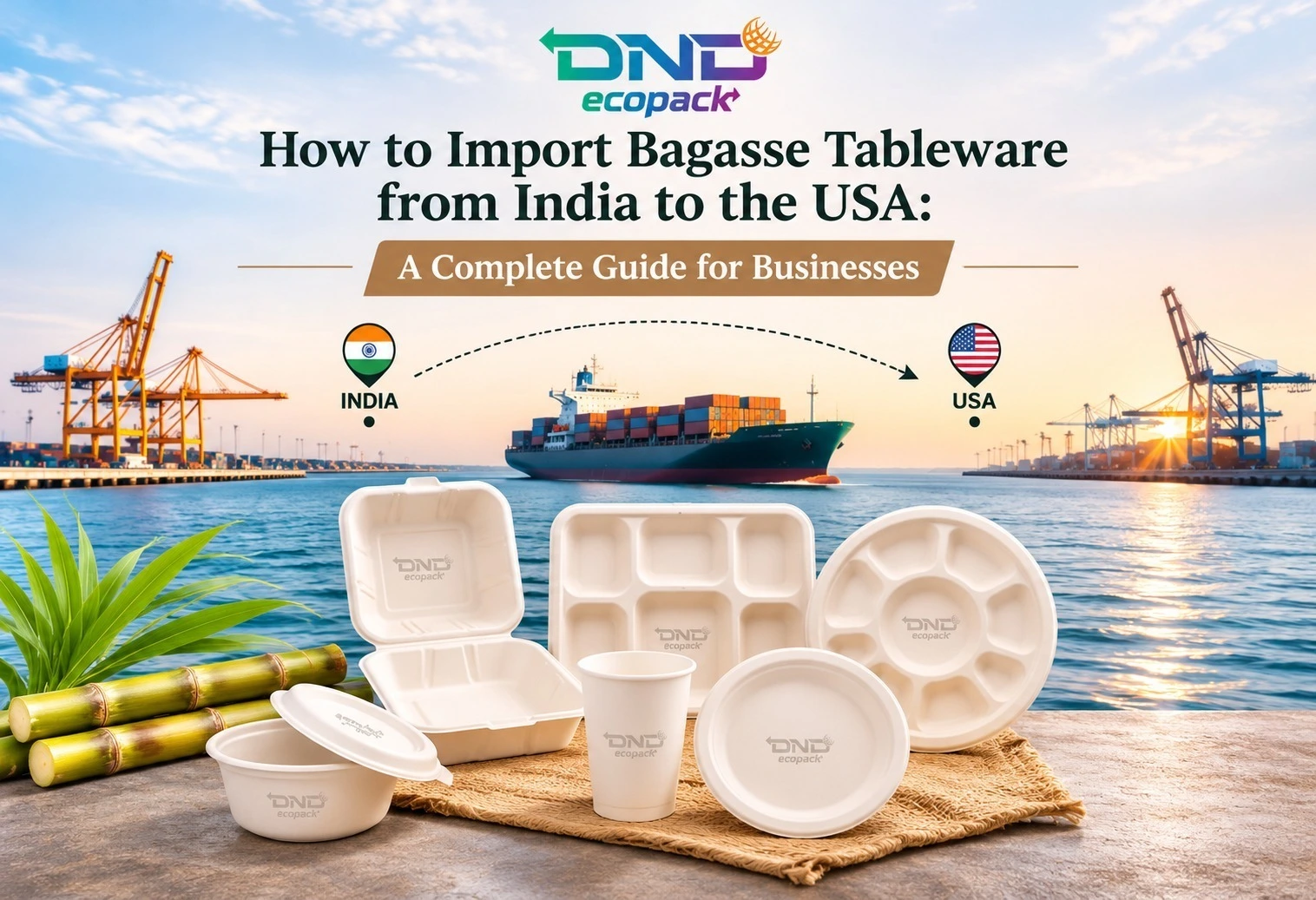
The demand for sustainable food packaging is creating new opportunities for businesses across the United States. Restaurants, catering companies, food distributors, and retailers are increasingly looking for alternatives to conventional plastic products. Among these options, Bagasse Tableware has gained attention because it is made from sugarcane fiber, a by-product of sugar production.
India has become an important sourcing destination for businesses interested in sugarcane-based products. However, importing disposable tableware involves more than finding a manufacturer and arranging shipment. Buyers must understand product quality, food-contact requirements, customs documentation, shipping costs, and supplier reliability.
If you are planning to import bagasse products from India to the USA, this guide explains the key steps involved.
1. Understand What Bagasse Tableware Is
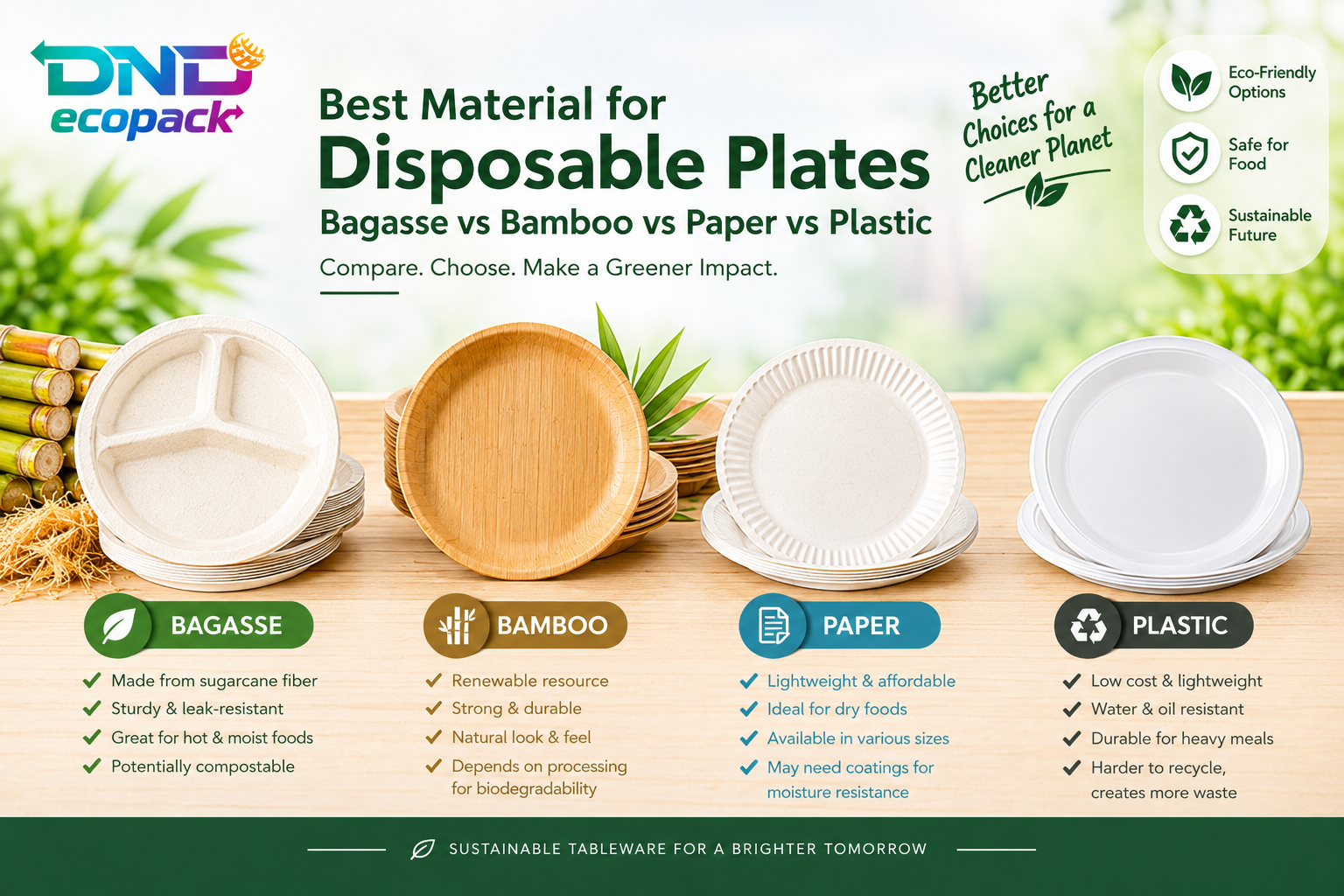
Bagasse is the fibrous material left after juice is extracted from sugarcane. Instead of allowing this agricultural by-product to go to waste, manufacturers process it into molded-fiber products such as plates, bowls, food containers, and meal trays.
Unlike conventional plastic tableware, sugarcane bagasse plates are designed for single-use food service and can offer a more environmentally considerate option when properly manufactured and disposed of under suitable conditions.
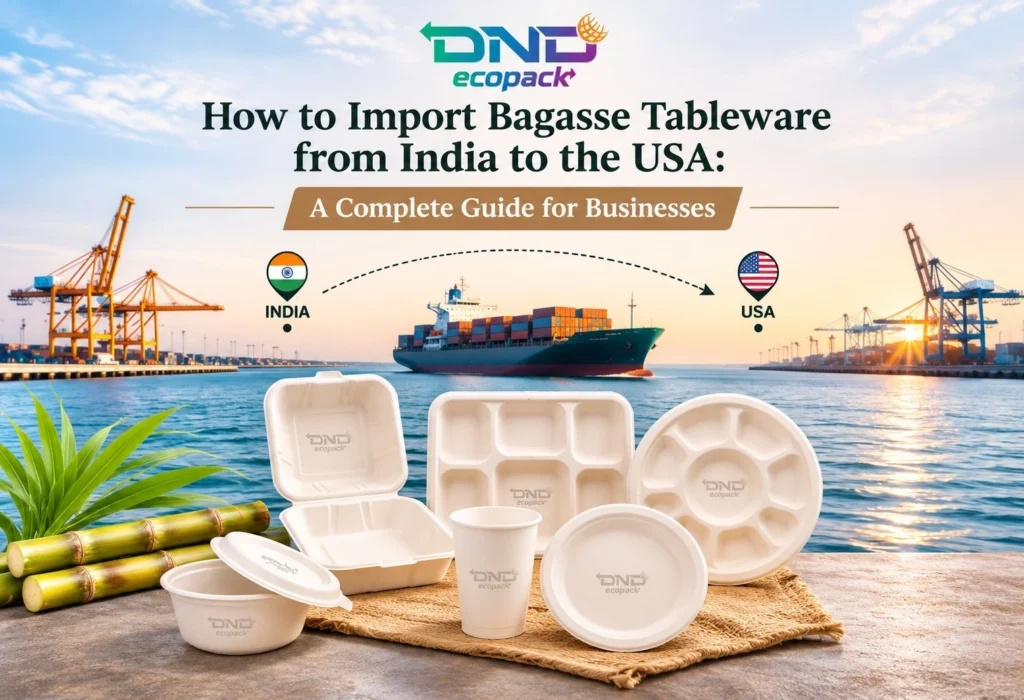
Common products available for import include:
- Round and compartment disposable plates
- Bagasse food containers and clamshell boxes
- Disposable meal trays
- Compostable bowls and serving products
Businesses can also explore decorative disposable plates and fancy disposable plates for catering, events, and takeaway services, depending on the supplier’s available designs.
2. Find a Reliable Bagasse Tableware Manufacturer in India
Choosing the right supplier is one of the most important decisions in the importing process. A low quotation may look attractive, but inconsistent quality, delayed shipments, or incomplete documentation can create expensive problems.
Before placing an order, evaluate the manufacturer’s production capacity, export experience, product range, and quality-control procedures.
Ask potential suppliers for:
- Company registration and business details
- Product catalogue and technical specifications
- Product samples for physical inspection
- Food-contact compliance documentation
- Manufacturing and quality-control information
- Export references and previous shipment experience
Request samples before confirming a large order. Check the thickness, shape, weight, surface finish, strength, and resistance to moisture and oil. For example, a disposable plate intended for hot meals should be tested under realistic serving conditions.
You can explore the product range and company information through DND ECOPACK, its About Us page, and the product catalogue.
3. Check US Food-Contact and Import Requirements
This is a step that importers should never overlook. Bagasse tableware is intended to come into contact with food, so its materials, coatings, additives, and manufacturing processes must be evaluated for applicable US requirements.
The US Food and Drug Administration (FDA) regulates substances used in food-contact materials. Importers should obtain relevant compliance information from manufacturers and verify that each component is suitable for its intended food-contact conditions.
Pay particular attention to:
- FDA food-contact compliance for applicable materials
- Safety of coatings, inks, and processing additives
- Intended use with hot, cold, oily, or acidic foods
- Migration or other relevant testing, where applicable
- Supporting technical documents and test reports
Do not assume that a product is FDA-approved simply because a supplier describes it as food-grade. Request supporting evidence and have the documentation reviewed where necessary.
Also, environmental claims matter. Terms such as biodegradable and compostable should be supported by appropriate evidence. US buyers should consider the FTC Green Guides when making environmental marketing claims. Compostability can depend on the product formulation and available disposal facilities.
4. Confirm Import Documentation and Customs Requirements
Once you have selected a supplier and confirmed product specifications, the next step is preparing the export and import paperwork.
For shipments from India to the USA, commonly required documents include:
- Commercial invoice
- Packing list
- Bill of lading or airway bill
- Certificate of origin, when required
- Product specifications and supporting compliance documents
- Customs entry information
- Importer identification and relevant declarations
The correct Harmonized Tariff Schedule (HTS) classification is especially important because customs duties depend on how the product is classified. Do not assume all bagasse plates, bowls, and containers share the same tariff code.
Check the applicable classification and duty rate using the US International Trade Commission’s HTS resources. A licensed US customs broker can help confirm the correct classification, entry requirements, and applicable duties.
Importers should also understand their responsibilities under US Customs and Border Protection (CBP) rules. Depending on the shipment, additional requirements may apply.
5. Calculate Shipping Costs and Choose the Right Method
Shipping costs directly affect the final landed cost of imported disposable tableware. Your calculation should include more than the supplier’s product price.
Consider these expenses:
- Product manufacturing cost
- Export packaging and inland transportation in India
- International freight
- Marine insurance, where applicable
- Customs duties and applicable fees
- Customs broker charges
- US port handling and domestic delivery
Sea freight is generally suitable for large commercial orders because it can offer a lower transportation cost per unit. Air freight may be useful for samples or urgent, smaller shipments, although it is usually more expensive.
Discuss Incoterms with your supplier before finalizing the purchase. Terms such as FOB, CIF, and DAP determine which party handles transportation costs, insurance, and delivery responsibilities. Make sure the agreement clearly identifies who manages customs clearance.
6. Choose the Right Products for the US Market
Before importing, research what your target customers actually need. Restaurants, supermarkets, catering businesses, and takeaway brands may require different product sizes and designs.
For example:
- Round plates: Suitable for everyday food service, catering, and takeaway meals. Explore round plates.
- Compartment plates: Useful for serving meals with separate food portions. View compartment plates.
- Meal trays: Suitable for institutional catering, food delivery, and takeaway services. Explore meal trays.
- Bowls: Useful for salads, snacks, rice dishes, and other food-service applications. Browse bagasse bowls.
Importers should compare product dimensions, packaging quantities, storage requirements, and customer preferences before committing to bulk purchases.
7. Start with Samples and a Trial Order
One common mistake among first-time importers is placing a large order without evaluating the actual product.
Start with samples and conduct practical checks. Test the disposable plates and bowls with different food types, temperatures, and serving conditions. Confirm whether the products maintain their shape and perform as expected.
Once the samples meet your requirements, consider a smaller commercial shipment before increasing order quantities.
Maintain clear communication about production timelines, packaging specifications, quality inspections, payment terms, and replacement policies. These details help prevent misunderstandings when working across international markets.
Conclusion
Importing Bagasse Tableware from India to the USA can create valuable opportunities for businesses serving the growing market for sustainable food-service products. However, successful importing depends on careful supplier selection, product testing, food-contact compliance, accurate customs classification, and realistic shipping calculations.
Whether you are sourcing sugarcane bagasse plates, eco friendly disposable plates, compostable tableware, or complete disposable tableware collections, preparation is essential.
DND ECOPACK offers a range of sugarcane-based tableware products for businesses exploring sustainable food-service alternatives. To discuss product requirements, bulk inquiries, or sourcing details, visit the DND ECOPACK website or contact the team.
Frequently Asked Questions
1. Is India a good country to import Bagasse Tableware from?
India is a good source for importing Bagasse Tableware, offering sugarcane-based disposable plates, bowls, and meal trays. DND ECOPACK provides a range of eco-friendly tableware products for businesses seeking sustainable food-service solutions. Explore the DND ECOPACK product range to find suitable products for your business.
2. Are sugarcane bagasse plates allowed in the USA?
They can be imported when they meet applicable US requirements for food-contact materials and customs entry. Importers should verify the materials, coatings, additives, and intended food-contact conditions before shipping.
3. What documents are required to import disposable tableware into the USA?
Common documents include a commercial invoice, packing list, bill of lading, certificate of origin where applicable, product specifications, and customs entry information. Additional documents may be required depending on the product.
4. Can I import bagasse disposable plates in bulk from India?
Yes, you can import bagasse disposable plates in bulk from India by partnering with a reliable manufacturer. DND ECOPACK specializes in sustainable sugarcane bagasse tableware and offers products such as disposable plates, compartment plates, bowls, and meal trays for food-service businesses and distributors. Learn more about the company on the DND ECOPACK About Us page
5. Are compostable tableware products suitable for restaurants and catering businesses?
Yes, where the products meet the business’s food-service requirements and applicable compostability standards. Buyers should check product performance and local commercial composting availability before choosing these products.